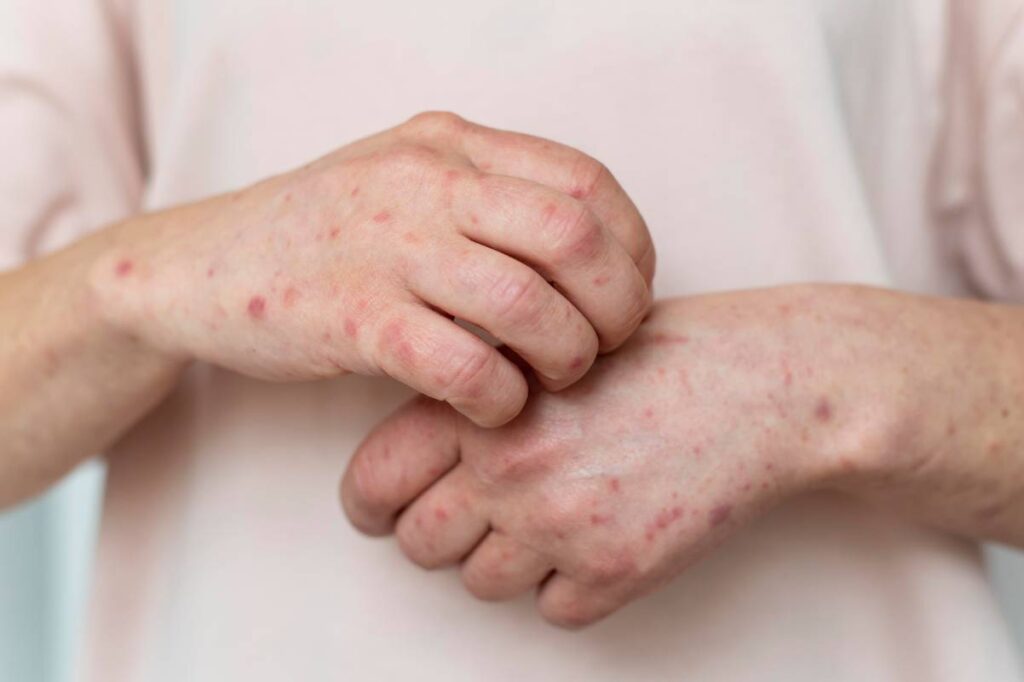
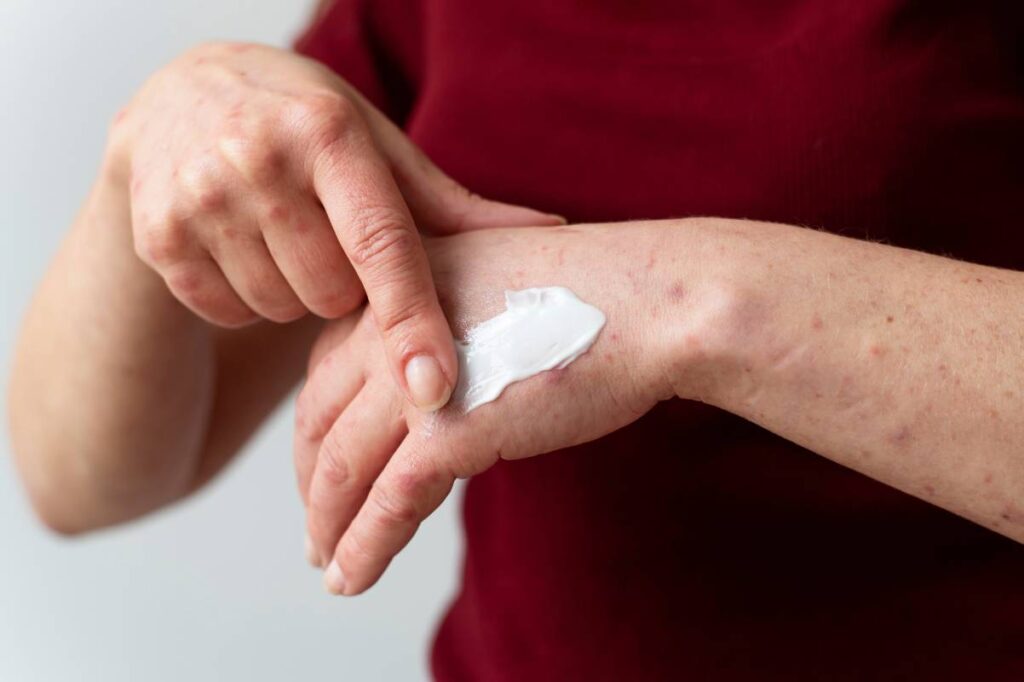
Despite the name, ringworm has nothing to do with worms. It is a fungal infection caused by dermatophytes—microorganisms that thrive on the skin, nails, and scalp. These fungi feed on keratin, leading to circular rashes, itching, and irritation.
With timely treatment, ringworm clears effectively and rarely causes complications.
Common Symptoms
Circular or ring-shaped rash
Red, itchy, or scaly skin
Cracked or peeling patches
Hair loss if the scalp is involved
Thickened or brittle nails (if nails are affected)
Early symptoms may appear mild—prompt evaluation avoids spread to other areas.
How Ringworm Spreads
Ringworm spreads easily through:
Direct skin-to-skin contact
Contaminated surfaces like gym mats, towels, bedding, or clothing
Contact with infected pets (commonly cats and dogs)
Sharing combs, razors, or personal items
It is common but not dangerous—with proper care, it resolves fully.
Diagnosis at SSRC Health Care
Our clinicians use a combination of clinical evaluation and targeted diagnostics to confirm ringworm:
Detailed skin examination
Wood’s lamp assessment (when needed)
Skin scrapings for microscopic analysis
Fungal cultures for persistent or severe cases
Take the First Step Toward Recovery
Ringworm is common but easily treatable with the right medical guidance.
Book your consultation at SSRC Health Care and get fast, effective relief today.
 Call for Appointment
 Jubilee Hills, Hyderabad, Telangana 500033
 Opening Hours: 9.00 am - 06.00 pm (Mon - Sat)